Glaucoma: Symptoms, Types,
Diagnosis & Treatment
Protect your vision from the "silent thief of sight" with early detection and expert care.
A silent condition that can steal your vision
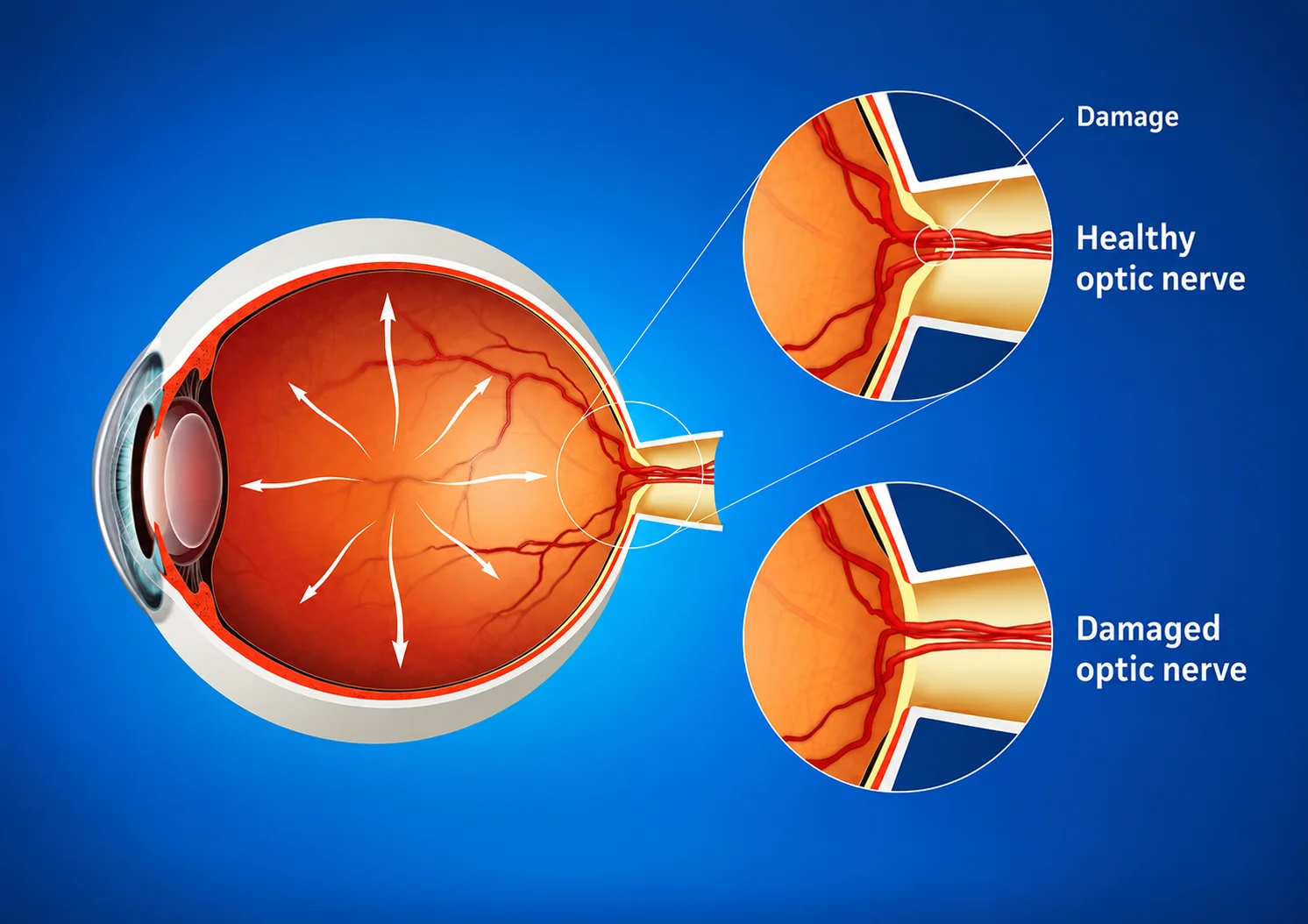
Glaucoma happens when the optic nerve — the cable that sends images from your eye to your brain — is damaged, usually from high pressure inside the eye. Left untreated, it is one of the leading causes of permanent blindness worldwide, often with no warning signs until vision is already lost.
- Early detection prevents most vision loss
- Usually painless in its most common form
- Treatable with drops, laser, or surgery
- Regular eye pressure checks are key
- More common after age 40
Types of Glaucoma
Glaucoma isn't one disease — it comes in several forms, each with its own cause and warning signs.
Open-Angle Glaucoma
The most common type. The drainage system slowly clogs, causing fluid to build up with no early pain — often unnoticed until side vision is lost.
Angle-Closure Glaucoma
The iris blocks the drainage angle, causing eye pressure to spike quickly. Brings sudden pain, blurry vision, and halos around lights.
Normal-Tension Glaucoma
Optic nerve damage occurs even when eye pressure is normal, often linked to poor blood flow or family history.
Secondary Glaucoma
Develops as a result of another condition — diabetes, eye injury, inflammation, or long-term steroid use.
Common Symptoms
Symptoms vary by type — some develop silently, others strike suddenly.
Who Is at Risk?
Age
Risk rises after 40 and increases further past 60
Family History
A close relative with glaucoma raises your own risk
Medical Conditions
Diabetes, high blood pressure, and long-term steroid use
Eye Pressure
Consistently high intraocular pressure (IOP)
Severe Myopia
High levels of nearsightedness increase susceptibility
Ethnic Background
Higher rates among African, Hispanic, and Asian populations
Our Diagnosis Process
Because vision lost to glaucoma cannot be restored, catching it early is everything.
Tonometry
Measures pressure inside the eye
Visual Field Test
Checks peripheral vision loss
Gonioscopy
Examines the eye's drainage angle
OCT Scan
Images the optic nerve in detail
Eye Exam
Doctor checks the nerve for damage
Treatment Options
There's no cure yet, but the right treatment can slow the disease and protect your remaining vision.
Eye Drop Medications
The most common first-line treatment. Drops work by either lowering fluid production inside the eye or helping it drain more efficiently.
- Taken daily, usually long-term
- Lowers intraocular pressure
- Multiple drop classes available
Laser Treatment
A quick, in-office procedure used for both major types of glaucoma.
- Laser trabeculoplasty — opens drainage in open-angle glaucoma
- Laser iridotomy — creates a small opening in the iris for angle-closure glaucoma
Surgery
Recommended when drops and laser aren't enough to control pressure.
- Trabeculectomy — creates a new drainage path
- Drainage implants (tubes) — helps fluid exit the eye
- MIGS — minimally invasive glaucoma surgery, faster recovery
Emerging Treatments
Research continues to expand what's possible for long-term glaucoma control.
- Slow-release drug implants
- Gene therapy under investigation
- Newer, less invasive surgical techniques
Why Choose Us
Experience
Years of specialized glaucoma care
Technology
Advanced diagnostic and surgical equipment
Personalized Care
Treatment plans built around your needs
Ongoing Support
Ongoing monitoring to protect your vision
Ready to Improve Your Vision?
Schedule a consultation with our expert ophthalmologists today.
Any Question
Fill out the form or reach out directly. We will respond!

Connecting you with Pakistan's best eye specialists through fast, reliable, and hassle-free online appointment booking.